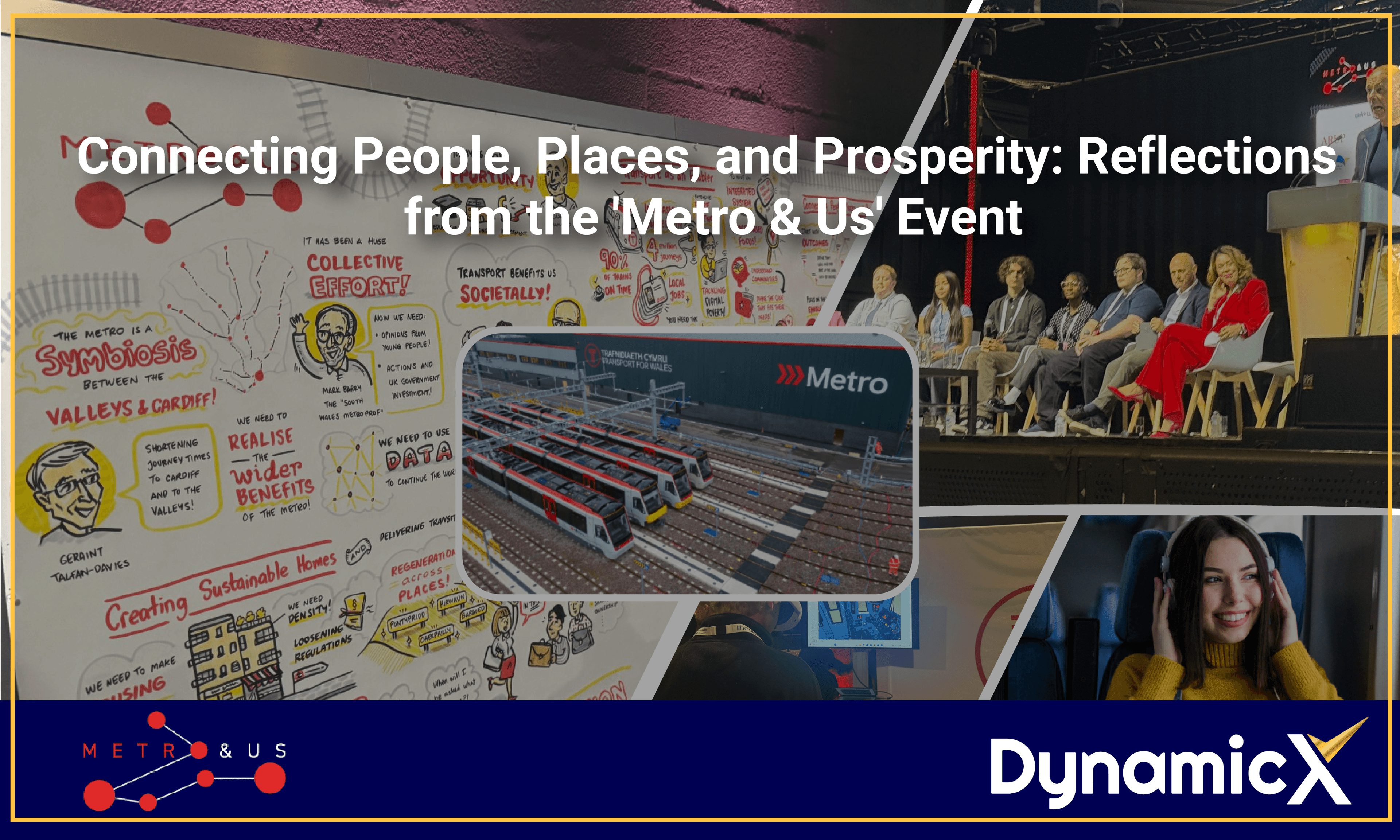
Connecting People, Places, and Prosperity: Reflections from the 'Metro & Us' Event
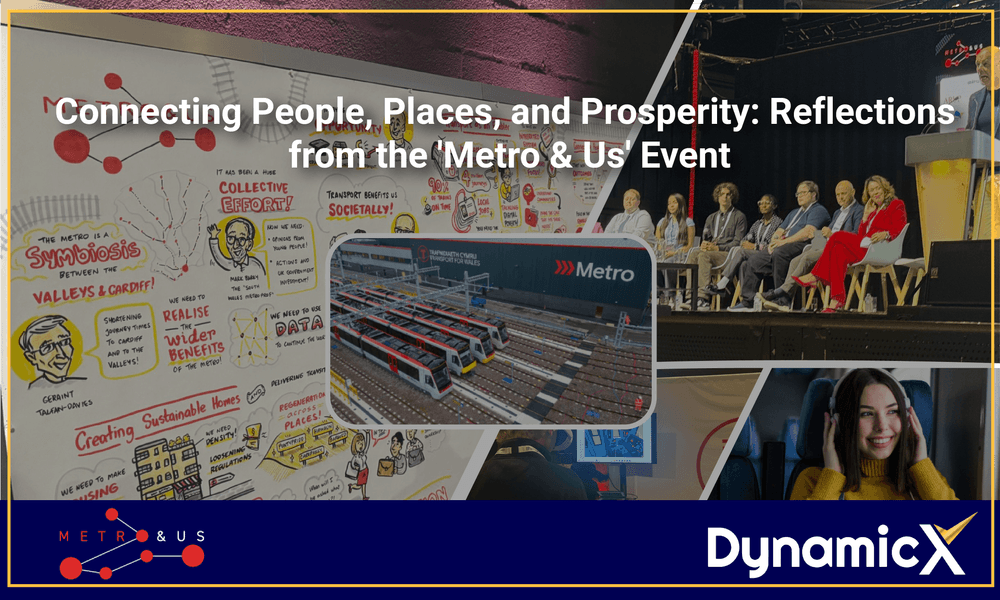
On 4th of june 2026 , Dynamic X Plus attended the highly anticipated 'Metro & Us' event at THE DEPOT in Cardiff. The session brought together experts from Transport for Wales (TFW ), Cardiff Capital Region (CCR), Freshwater, Arup, Mott MacDonald and key public and private sector leaders. It gave us a fantastic look into the next few decades of transport and development in Wales.
The day featured a prominent line-up of speakers, led by the newly appointed Welsh Government Deputy Minister for Transport, Mark Hooper MS, marking his first public address since taking office. Alongside the Minister, we heard critical insights from James Price (CEO of Transport for Wales), Kellie Beirne (CEO of the Cardiff Capital Region), and Jen Heal (Head of the Design Commission for Wales). The entire event was hosted and chaired by broadcaster Jason Mohammad, who guided several lively panel debates throughout the day.
After listening to the discussions, it is clear that a transport network of this size is much more than just a train upgrade. It is a powerful tool to grow the local economy, build better housing, and bring long-term stability to the region. For developers, architects, and planners, this change completely transforms how we must design and build future projects.
The Metro as a Partnership: Closing the Gap Between the Valleys and Cardiff
One of the most important ideas shared by the panels is that the South Wales Metro creates a vital link between the Valleys and Cardiff. In the past, city centres have boomed while smaller regional areas lagged behind. By making journey times much shorter, this project breaks down old travel barriers.
It creates a smoothly connected area where workers, businesses, and housing markets link together naturally. For property developers and master planners, this means towns outside Cardiff are no longer isolated markets. Instead, they are valuable, easy-to-reach extensions of the main city.
Transport as a Tool to Support Society and the Economy
In modern town planning, infrastructure cannot just be a single road or train track built on its own. It needs to be a complete system designed for real efficiency and everyday use. The goals of this new network show exactly that depth:
Excellent Reliability: The project aims for 90% of trains to run on time, creating a transport system that the public and businesses can rely on completely.
Massive Passenger Travel: The system is built to handle over 4 million journeys every year, making it easy for the regional workforce to move around without stress.
High-Speed Digital Links: Alongside the train tracks, teams are laying a large fibre network. This ensures that transport routes also work as high-speed internet pathways to help regional areas stay connected.
When public transport is reliable, it protects the local economy. It ensures that money spent on infrastructure turns into local jobs, fair regional investments, and better skills for the community.
Smart Planning & Better Housing Near Transport Hubs
A major challenge for the property sector is moving away from building widespread, low-density housing. Instead, the industry needs to focus on Transit-Oriented Development (TOD). To create areas where people and businesses can truly thrive, new homes must be accessible, closely packed, and smart.
To match the speed of these new transport links, private developers and planning authorities need to work together in three main ways:
Building with More Density: We must focus on building high-density flats, shops, and offices directly around key transport stations.
Faster Planning Rules: Local councils need to relax rigid planning rules to speed up projects on old industrial land (brownfield sites).
Protecting Nature and Heritage: Building more homes does not mean destroying local history. Developing areas like Pontypridd, Caerphilly, and Merthyr Tydfil requires a careful balance between modern building and protecting green spaces, local history, and community identity.
Bridging the Gap with Immersive 3D Visualisation
Managing large regional projects involves working with a massive mix of people from local councils and planning offices to community groups and financial investors. Traditional blueprints, long technical reports, and heavy paperwork often fail to show what an unbuilt space will actually feel like.
This is exactly where Dynamic X helps. Using 3D Animated Walkthroughs, realistic CGI, and precise 4D Sequencing, we help developers and architects get faster approvals and secure early sales:
Getting Faster Approvals: We turn complex plans into interactive digital realities. This shows investors and councils exactly how a project makes the best use of space while fully respecting local heritage.
Planning Construction with 4D Sequencing: Large building projects require precise schedules. Our 4D visual timelines let engineering teams see construction stages over time, spotting delivery clashes early and reducing disruptions near active railway lines.
Boosting B2B Pre-Sales: By showing lighting, textures, and layouts with absolute accuracy, we let future business tenants experience the project long before building work even starts.
Looking Ahead
The South Wales Metro is setting a brilliant standard for regional travel. By using transport to build smart housing, boost business growth, and improve internet access, it creates a strong foundation for a modern economy. At Dynamic X, we are proud to provide the advanced visualisation tools that help our partners turn these massive plans into real world success.